
Last Updated on September 5, 2026
Disney has never published the exact formula behind the Magic Key blockout calendar, but the pattern is not exactly hidden either. If you line up a few years of blockout calendars side by side, the logic becomes pretty obvious.
Disney blocks Magic Key holders out of exactly the dates it expects to be busiest with full price ticket buyers, and it does that more aggressively on the cheaper passes than the expensive ones.
This is not a random calendar. It is a demand management tool, and once you see how it works, the whole system makes a lot more sense.
What a Blockout Date Actually Does
Blockouts are separate from reservation availability. Even on an allowed date you still need a Magic Key park reservation (~90-day window; verify in-app). See Disneyland park reservations.
A blockout date means two things at once. Your Magic Key is not valid for park admission on that date, and you also cannot hold or make a park reservation for that date.
It is not a soft restriction. If a date is blocked for your pass tier, you are locked out of both parks entirely on that day, no exceptions.
This is separate from the theme park reservation system itself. Even on a day that is open for your pass tier, you still need an available reservation for the specific park you want to enter.
Reservation inventory allocated to Magic Key holders is capacity controlled, so a date can technically be unblocked for your tier and still be unavailable if the reservation slots for passholders have already filled up.
How Does Disneyland Decide Blockout Dates?
The clearest way to understand the blockout calendar is to flip the question around. Instead of asking which dates get blocked, ask which dates Disney expects tourists and general ticket buyers to fill the parks on their own. Those are almost always the dates that get blocked for the lower tier passes first.
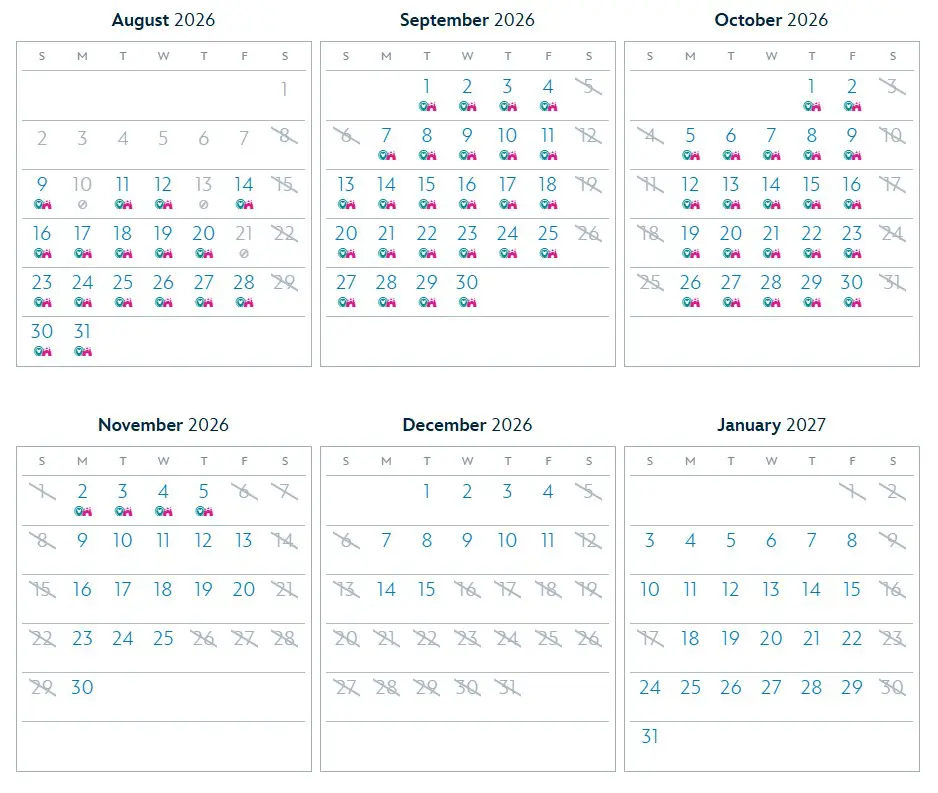
Access maps inversely to expected demand. The cheaper the pass, the more high demand dates it loses. A date that stays open for every single tier, including the cheapest one, is usually a signal that Disney expects modest tourist turnout and is comfortable adding the local passholder base on top of whatever visitors show up.
A date that is blocked for everyone except the most expensive tier is the opposite signal: Disney expects the parks to fill up on ticket sales alone.
Weekends, school breaks, Halloween Time weekends, and the days around major holidays consistently show up as blocked or restricted across most tiers, while quieter stretches in January through March and September through early November tend to stay wide open.
None of this is a coincidence. It lines up almost exactly with Disneyland’s own crowd calendar.
The Four Magic Key Tiers in 2026
As of 2026, the Magic Key lineup runs four tiers, and the blockout calendar gets noticeably more restrictive as the price drops.
Inspire Key
The top tier and the most expensive pass in the lineup. It carries the fewest blockout dates of any tier, historically limited to a short window around the very end of December.
Believe Key
The second tier. It stays open through most of summer, with the notable exception of the Fourth of July weekend, which is one of the few summer dates blocked even at this level.
Explore Key
New for 2026, replacing the previous Enchant Key. It carries the same general benefits as its predecessor but with a different blockout calendar, including blocked Fridays and Saturdays across the summer months.
Imagine Key
The entry level tier, available only to Southern California residents. This pass loses the most ground, with most weekends blocked along with an extended stretch from late May through mid-August.
Why Even the Top Tier Gets Blocked at Christmas
For 2026, the days between December 21 and December 31 are blocked for every single Magic Key tier, Inspire included. That has not always been the case. In past years the top tier pass has managed to stay open through nearly the entire calendar, but this marks the first time even the highest tier gets shut out during the holiday stretch.
Disney effectively flagged those eleven days as its own peak of peak forecast for the year, busy enough that even its most loyal, highest paying passholders get locked out in favor of ticketed guests.
Why This System Exists
Annual passholders visit far more often than the average ticketed guest, and without some kind of cap, a park full of passholders on top of a normal day of tourists gets crowded fast.
The blockout system lets Disney sell a genuinely valuable annual pass product without letting local repeat visitors overwhelm the parks on the exact days out of town guests have already booked flights and hotels around.
It also nudges passholders who want more access toward the pricier tiers, which is good for Disney’s bottom line and, in fairness, does help spread attendance out across quieter parts of the year.
What This Means for Your Planning
If you are trying to decide which Magic Key tier makes sense, look at the specific months you actually plan to visit rather than the pass name or price alone. Someone who mainly visits on weekday afternoons in the fall can often get away with a lower tier pass and never notice a blockout date all year.
Someone who wants summer weekends and the days around Halloween Time needs to budget for one of the top two tiers.
Always confirm your exact dates on the official Magic Key blockout calendar in the Disneyland app before you plan around them. Disney can and does adjust these calendars with notice, and the difference between “open” and “blocked” for your specific tier is worth double checking close to your visit, especially around holiday weekends.
It is also worth remembering that Magic Key holders who no-show three reservations within a 90 day window lose the ability to make new reservations for a period of time, so hold reservations you actually intend to use.
Not a Southern California local and don’t need a Magic Key?
Get Away Today can help you find the right ticket package for your trip dates
Get My Free QuoteBest price guaranteed · Layaway plans · Disneyland specialists
Final Thoughts
The Magic Key blockout calendar is not arbitrary. It is a direct reflection of how much foot traffic Disney expects on any given day, filtered through four price tiers that trade access for cost.
Once you understand that the cheapest pass loses the most valuable dates first, the whole calendar stops looking confusing and starts looking predictable.
For more on timing your visit around crowd levels regardless of pass type, check out the Enchanted Insider Disneyland Itinerary Guide.
People Also Ask…
Blockout dates map inversely to expected demand. Disney blocks the cheaper Magic Key tiers out of the dates it expects full price ticket buyers to fill on their own, while the priciest tiers keep access to those same dates.
A blockout date means your pass is not valid for admission or reservations at all that day. A park reservation is a separate requirement needed even on days that are open for your tier, since reservation inventory for passholders is capacity controlled.
The Inspire Key, the top tier in the 2026 lineup, has the fewest blockout dates of any Magic Key pass.
Yes, in 2026 December 21 through December 31 is blocked for all four tiers, including the top tier Inspire Key, marking the first time the highest tier has been blocked during that stretch.
Magic Key holders who no-show three park reservations within a 90 day window lose the ability to make new reservations for a period of time.