
Last Updated on May 17, 2026
Here is a thing people get wrong about Disneyland and calorie deficits. They assume that because you are walking all day, you can eat whatever you want and come out ahead. They also assume the reverse: that staying on a deficit at Disneyland requires eating sad salads while everyone around you eats corn dogs and churros.
Neither is accurate.
A full day at Disneyland genuinely burns more calories than a sedentary day at home. Fitbit data from Disneyland guests consistently shows 17,000 to 28,000 steps, which translates to roughly 7 to 12 miles of walking. For a 160-pound person walking at a moderate pace, that is approximately 600 to 900 calories of additional expenditure compared to a normal day. That is real. It is also not a blank check to eat a turkey leg, a Monte Cristo, two churros, and a Dole Whip float without consequence.
The people who come home from Disneyland genuinely not having wrecked their progress are the ones who did a bit of planning. They knew which foods were worth the calories, which swaps saved 400 to 600 calories without any sacrifice in satisfaction, and how to fit one real indulgence into the day without blowing the whole thing. That is what this guide is for.
📊 Stop Guessing: Try Our Free Disneyland Nutrition Calculator!
While this guide gives you the strategy for choosing the right meals, tracking your exact numbers inside the parks can be impossible since Disney doesn’t publish official nutrition facts.
To solve this, we built the 2026 Disneyland Nutrition Calculator! You can search over 400 park items—from classic Dole Whips and Bengal BBQ skewers to seasonal treats—and instantly get estimated calories, protein, carbs, and sodium counts.
Before you head to your next mobile order, open up our Disneyland Nutrition Tracker in a new tab to map out your macros for the day!
The Calorie Math of a Disneyland Day
Before deciding what to eat, it helps to understand what you are actually working with. Most adults have a total daily energy expenditure (TDEE) somewhere between 1,600 and 2,400 calories depending on their size, age, and baseline activity level. A typical calorie deficit for weight loss is 300 to 500 calories below that number.
At Disneyland, the extra walking adds approximately 400 to 800 calories of burn on top of your baseline, depending on how many miles you cover and your body weight. That means your effective daily calorie budget on a Disneyland day is meaningfully higher than it is at home, which is good news. A person who normally eats 1,600 calories to maintain a 300-calorie deficit could potentially eat 2,000 to 2,400 calories on a park day and still be in deficit, or at least maintenance.
The challenge is that Disneyland food is calorie-dense by design. It is theme park food. Fried items, sugary drinks, pastries, and oversized portions are everywhere. If you are not paying attention, it is genuinely easy to consume 3,000 to 4,000 calories in a park day without feeling like you overdid it, because you are eating in small amounts scattered across a long, active, distracted day.
The strategy that actually works is planning your one real splurge in advance, making lower-calorie swaps everywhere else that you will not notice or miss, and drinking water instead of anything that has calories in it. Those three things together will keep most people on track without feeling restricted.
The Swap That Saves the Most Calories: Drinks
Before we get to food, the single highest-leverage calorie decision at Disneyland is what you drink. A large fountain soda at Disneyland runs approximately 250 to 400 calories for a refillable cup, and many guests drink two or three fills across a park day. That is 500 to 1,200 liquid calories that add nothing to satiety and everything to the day’s total.
Free ice water is available at any quick-service restaurant that serves fountain drinks. You do not need to buy food. Walk up and ask. Several locations including Galactic Grill, Rancho del Zocalo, and Red Rose Taverne have self-serve filtered water stations. Switching from soda to free water for an entire park day saves 500 to 1,000 calories while also improving how you feel during eight hours of walking in Southern California heat.
If you want flavor, unsweetened iced tea is available at most locations. Cold brew coffee from the Starbucks on Main Street (Market House) or at Downtown Disney runs about 5 calories black. Both are zero to near-zero calorie choices that still give you something to drink that is not plain water.
This one swap, drinks to water, is frequently the difference between a park day that works for your deficit and one that does not. Do it first.
The Best Low-Calorie Meals at Disneyland
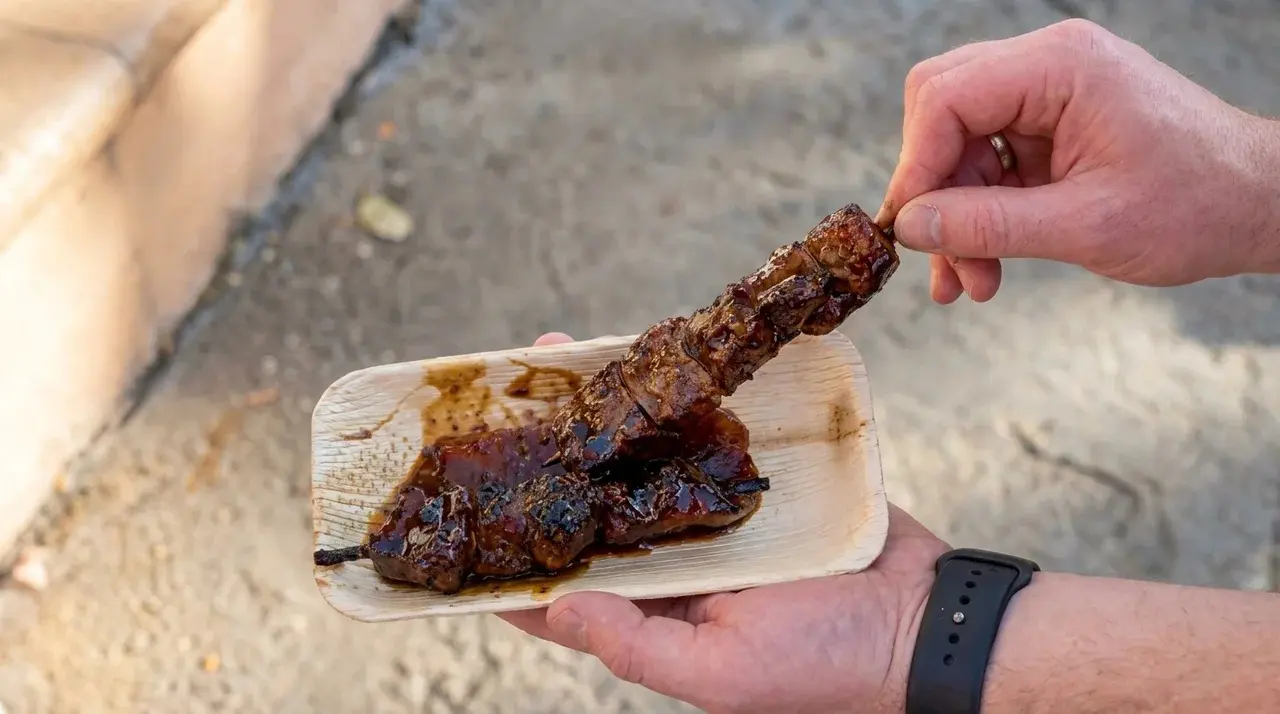
Bengal Barbecue (Adventureland, Disneyland Park) — Approximately 200-350 calories per two skewers
Two Bengal Barbecue skewers are one of the best calorie-to-satiety deals in either park. One chicken skewer runs approximately 100 to 150 calories. One vegetable skewer adds another 80 to 120 calories. Together, two skewers give you a balanced, satisfying snack or light meal for roughly 200 to 300 calories. They are also genuinely good. This is not eating sad food because you are on a diet. Bengal Barbecue is legitimately one of the most popular spots in Adventureland.
The hummus trio with crunchy vegetables is another good option here, running approximately 200 to 250 calories. It is satiating because of the fat and protein in the hummus, and the portion is appropriate rather than enormous.
Docking Bay 7 Tip-Yip Chicken Salad (Galaxy’s Edge, Disneyland Park) — Approximately 400-500 calories with dressing on the side
The Tip-Yip chicken salad (officially the Surabat Valley Greens with Roasted Tip-Yip) is marinated chicken over mixed greens with a quinoa-veggie mix, mini peppers, olives, cotija cheese, and cilantro dressing. Ask for the dressing on the side and use about half of it. This takes a roughly 500 to 600 calorie dish down to 400 to 500 calories while keeping the protein and volume that make it satisfying. It is one of the most nutrient-dense quick-service meals in either park.
Galactic Grill Chopped Salad with Grilled Chicken (Tomorrowland, Disneyland Park) — Approximately 350-450 calories with dressing on the side
Mixed lettuce, grilled chicken, cucumber, tomato, onion, red pepper, and feta with roasted pepper ranch dressing on the side. Ask for the dressing on the side and use a small amount. A generous grilled chicken salad with controlled dressing typically runs 350 to 450 calories. This is the most straightforward calorie-conscious meal on the Tomorrowland side of the park.
Rancho del Zocalo Fire-Roasted Chicken (Frontierland, Disneyland Park) — Approximately 350-450 calories for the chicken only
The fire-roasted chicken marinated in chile and citrus is excellent. The dish comes with rice and refried beans, but the chicken on its own runs approximately 350 to 450 calories depending on portion. Eat the chicken first and treat the sides as optional. If you are not hungry enough for them, leave them. This is a straightforward grilled protein that gives you a real meal without a significant calorie hit.
Lamplight Lounge Poke Bowl (Pixar Pier, DCA) — Approximately 400-500 calories
Wild-caught fish, edamame, fresh pineapple, cucumber, and seaweed salad in a clean preparation. This is one of the better calorie-conscious full meals at the resort. Fish is lean protein, edamame adds plant protein and fiber, and the bowl format means reasonable portion control compared to a fried entree with sides. Lamplight Lounge requires a walk-in wait or a reservation but is worth planning around if you are spending time in DCA.
Cocina Cucamonga Pollo Asado Tacos (Pacific Wharf, DCA) — Approximately 400-500 calories for two tacos
Two pollo asado tacos on corn tortillas with achiote-marinated grilled chicken, crushed avocado, and Fuego salsa. Corn tortillas run about 50 to 60 calories each, and grilled chicken is lean protein. The avocado adds healthy fat and satiety. Two tacos at approximately 200 to 250 calories each is a satisfying meal that fits comfortably into a deficit day.
Tiana’s Palace 7 Greens Gumbo (New Orleans Square, Disneyland Park) — Approximately 400-500 calories for the plant-based version
White beans, okra, yams, sweet potatoes, and heirloom rice. High in fiber and nutrients, moderate in calories, genuinely filling. The plant-based version avoids the extra fat from andouille sausage and runs somewhat lower than the chicken and sausage version. A bowl of the gumbo with a piece of cornbread on the side is a substantial lunch or dinner for a reasonable calorie count.
The Best Low-Calorie Snacks
Snacking is where calorie deficits typically fall apart at theme parks, because snack options are everywhere and they all look appealing. Here are the ones that give you the most satisfaction for the fewest calories.
Fresh fruit from the fruit stands throughout both parks is your lowest-calorie, highest-volume option. A cup of mango spears or pineapple spears runs approximately 80 to 100 calories. A whole banana is about 100 calories. These are not exciting, but they are real food that fills the gap between meals without denting your budget.
The Dole Whip at the Tiki Juice Bar in Adventureland runs approximately 90 to 110 calories for a standard serving. A small cup, not a float, not the giant novelty preparation, just the classic pineapple soft-serve in a cup. This is the best calorie-to-experience ratio of any treat at Disneyland. It is iconic, it is genuinely delicious, and it is lighter than almost any other dessert option in either park. Get the cup, not the float (the float adds roughly 100 calories from pineapple juice). Sit somewhere shaded and enjoy it. This is not a sacrifice. This is making a good call.
A churro runs approximately 250 calories. That is not catastrophic. But if you are going to eat a churro, that is your treat for the snack portion of the day. The problem is that Disneyland makes it easy to have multiple churro-tier snacks without realizing you have stacked 700 to 900 calories in snacks alone. The Dole Whip is a better use of your treat budget because it is a more memorable and unique experience than a churro, which you can get at any county fair.
Popcorn from the carts is approximately 300 to 400 calories for a full bag. Reasonable for a shared snack, expensive for one person to eat solo. If you want popcorn, share it.
Corn on the cob from Ship to Shore in Frontierland is approximately 175 calories and genuinely filling because of the fiber and water content. It is one of the better lower-calorie savory snacks in the park.
The High-Calorie Foods Worth Knowing About
These are not foods to automatically avoid. They are foods to make a conscious decision about rather than eating on autopilot.
The Monte Cristo sandwich at Cafe Orleans is approximately 950 to 1,100 calories for the whole sandwich, based on the original D23 recipe. That is half or more of a normal day’s calorie budget in a single item. If the Monte Cristo is your chosen splurge, plan the rest of your day around it. Eat lighter at every other meal and snack. The Monte Cristo is worth it if it is a deliberate choice. It is painful if it was an impulsive one on top of a corn dog and a pretzel.
The turkey leg is approximately 1,093 calories. It is also 5,284 milligrams of sodium, which will have you retaining water for the next day. If you want the turkey leg experience with less damage, share one between two people. Half a turkey leg at 550 calories is still a meaningful protein-forward snack.
The Plaza Inn fried chicken is approximately 700 to 900 calories for a full plate including mashed potatoes and gravy. The chicken itself without the sides is closer to 350 to 450 calories. If you love Plaza Inn, order the chicken and skip the sides or choose fruit instead. You still get the experience without the full calorie hit.
The corn dog from the Little Red Wagon is approximately 400 to 500 calories. Reasonable for a main meal item, but it is very calorie-dense for what feels like a snack. Eat it as your meal, not as an add-on to something else.
How to Build a Deficit Day at Disneyland
Here is how a practical calorie-conscious day at Disneyland actually looks. This is not perfection. It is a real approach that lets you eat well, enjoy the park, have a treat, and come out without having blown your goals.
Eat a solid breakfast before you enter the park. A protein-heavy breakfast from your hotel, a grab-and-go from the Grand Californian’s Craftsman Grill, or food you brought from home sets your morning without you spending early park calories on convenience food. Oatmeal with fruit, Greek yogurt, eggs, a protein shake. Something with 300 to 500 calories and enough protein and fiber to last until lunch without constant hunger.
Mid-morning, if hunger strikes, one Bengal Barbecue chicken skewer or a small cup of fresh fruit from a stand. 100 to 150 calories. Keep moving.
Lunch at Docking Bay 7 (Tip-Yip chicken salad, dressing on the side) or the Galactic Grill chopped salad with grilled chicken. Approximately 400 to 500 calories. Real food, good protein, volume that keeps you full through the afternoon.
Mid-afternoon, your planned treat. A Dole Whip cup. Approximately 100 calories and a genuinely iconic Disneyland experience. Or a small piece of fresh fruit. Save the Monte Cristo or the turkey leg for this slot if that is the thing you most want, and structure the day around it.
Dinner at Tiana’s Palace, Rancho del Zocalo, or Lamplight Lounge. A protein-forward meal without heavy sides. Approximately 400 to 600 calories.
Total for the day across meals and snacks: roughly 1,500 to 2,000 calories. With 600 to 900 calories burned through park walking, your effective net intake is significantly lower than that. Most people maintaining or pursuing a modest deficit at home will find this range puts them right where they want to be, or potentially even in a larger deficit than usual.
The Swaps That Actually Matter
These individual swaps are where the meaningful calorie savings happen. None of them feel like deprivation once you are in the park.
Swap the fountain soda for free water. Saves 250 to 1,000 calories across the day depending on how much you would have otherwise drank. This is the single highest-impact swap on this list.
Swap fries for fresh fruit as your side. Every quick-service burger location at Disneyland will swap fresh fruit for fries if you ask. This saves approximately 300 to 400 calories on the side dish alone. You still get your burger. You just replace the least satisfying part of the meal with something better.
Swap the Dole Whip float for the plain Dole Whip cup. The float adds approximately 100 calories from pineapple juice. The cup on its own is the better experience anyway because you get the full concentrated flavor without diluting it.
Swap the full Monte Cristo for half the Monte Cristo. Cafe Orleans portions are designed for sharing. Splitting the sandwich with someone saves you 475 to 550 calories while still getting the taste experience you came for.
Swap the kids meal portion for an adult portion when eating light. Disneyland’s quick-service kids meals cost less and come in appropriate portions for someone eating on a deficit. The Disney Check kids meal at Jolly Holiday Bakery Cafe (turkey sandwich, apple slices, baby carrots, water) is a complete, balanced meal that comes in under 600 calories by Disney’s own guidelines. Adults can order it. Nobody is going to stop you.
Swap the large popcorn for a shared small. Popcorn carts sell the large as the default, but a small shared between two people is a reasonable snack rather than a calorie sink. If you are alone, skip the popcorn and choose fresh fruit instead.
The Treats Worth the Calories
Being on a calorie deficit at Disneyland does not mean eating nothing enjoyable. It means being intentional about which enjoyable things you eat. Here is a quick ranking of treats by calorie value, meaning how much experience and satisfaction you get for the calories spent.
The Dole Whip cup delivers exceptional value at approximately 100 calories. It is uniquely Disneyland, it is genuinely excellent, and it is one of the lowest-calorie treats in either park. Eat this one without guilt.
The churro at approximately 250 calories is fine, but it is also available at every county fair and sports stadium in California. If the churro is something you specifically want, eat it. If you are eating it because it is there, skip it and save the calories for something more memorable.
The Monte Cristo at approximately 1,000 calories is worth it exactly once, planned in advance, as your designated splurge for the trip. It is not a casual snack. It is a full meal replacement. Treat it that way and it fits into a deficit day. Eat it on impulse in addition to everything else and it does not.
The Mickey Premium Ice Cream Bar runs approximately 330 calories and is one of the most recognizable Disney treats there is. If that is your splurge, it is a reasonable one. It is more worth the calories than a generic churro or pretzel because it is something you specifically get at Disneyland.
Bringing Your Own Food
Disneyland allows outside food and non-alcoholic beverages. Bringing your own snacks is the most reliable way to stay on a deficit at the park because it gives you complete control over what you eat between meals.
Good options to pack: protein bars (check labels for calorie and sugar content), Greek yogurt cups in an insulated bag, pre-portioned nuts, whole fruit, rice cakes, jerky, and cut vegetables with hummus cups. These bridge the gaps between meals without requiring you to find and order low-calorie food in the middle of a busy park day.
Packing food also saves money, which you can redirect toward one genuinely good sit-down meal. Eating a $3 protein bar for a mid-morning snack instead of a $7 pretzel saves money and saves approximately 200 calories. The cumulative effect of bringing your own snacks across a full day is significant on both fronts.
Plan Your Disneyland Visit
For the full strategy on building your day around both parks, timing your meals around the best rides and entertainment, and making the most of every hour, the Enchanted Insider Disneyland Itinerary Guide covers everything. For the best rates on hotel and ticket packages near the resort, Get Away Today is the travel partner we use and recommend for Disneyland Resort vacations.
FAQ
Yes, with planning. A full day at Disneyland burns approximately 600 to 900 extra calories through walking compared to a sedentary day, which meaningfully increases your effective calorie budget. The key is making lower-calorie choices at meals and snacks, switching drinks to free water, and planning any indulgent treats deliberately rather than eating on impulse throughout the day.
Fitbit data from Disneyland guests consistently shows 17,000 to 28,000 steps per day, which translates to roughly 7 to 12 miles of walking. For a 160-pound person, that is approximately 600 to 900 extra calories burned compared to a typical sedentary day at home. The exact amount varies significantly based on your weight, walking pace, and how many miles you actually cover.
A plain Dole Whip cup from the Tiki Juice Bar in Adventureland is approximately 90 to 110 calories and is one of the lowest-calorie treats available in either park. It is also genuinely iconic and one of the best food experiences at Disneyland, making it the best calorie-to-experience ratio of any treat available.
The Tip-Yip chicken salad at Docking Bay 7 with dressing on the side (approximately 400 to 500 calories) is the best calorie-conscious lunch in Disneyland Park. The chopped salad with grilled chicken at Galactic Grill (approximately 350 to 450 calories with dressing on the side) is another strong option. In DCA, the pollo asado tacos at Cocina Cucamonga or the poke bowl at Lamplight Lounge are both solid choices in the 400 to 500 calorie range.
The Disney turkey leg is approximately 1,093 calories and also contains over 5,000 milligrams of sodium due to the brine used before smoking. The Monte Cristo sandwich at Cafe Orleans runs approximately 950 to 1,100 calories for the whole sandwich. Both are worth having as a deliberate planned splurge rather than an impulse snack layered on top of other meals.