
Last Updated on October 15, 2026
Updated April 2026. Everything you need to know about Star Tours at Disneyland including what the ride is, how the randomized storyline system works, the full list of possible destinations, height requirements, Lightning Lane availability, and tips for getting the most out of it.
Star Tours: The Adventures Continue is a 3D motion simulator attraction inside Tomorrowland at Disneyland Park. It has been a staple of the park since its original version opened in 1987, and the current version — a complete reimagining that launched in 2011 and has been updated several times since is one of the most technically impressive rides in the park. If you have not ridden it in the last few years, there is a good chance the version you remember is not the one running today.
Here is everything you need to know before you ride.
What Star Tours Actually Is
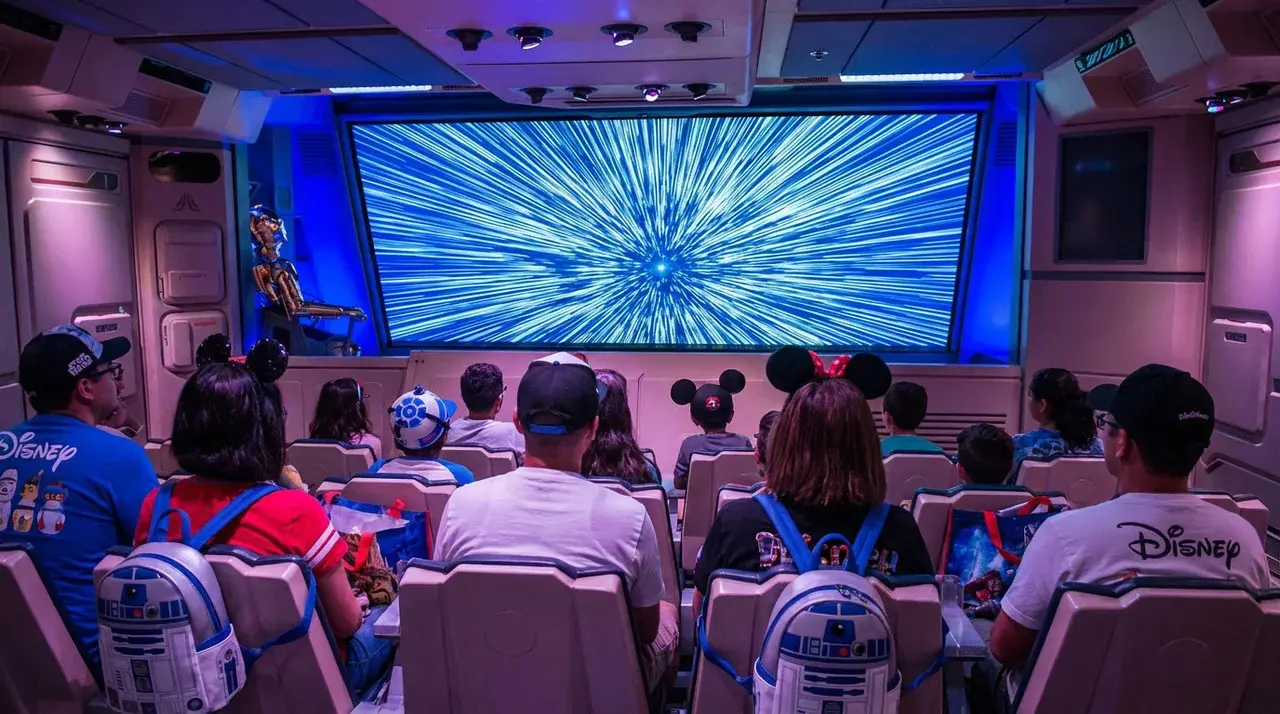
Star Tours is a flight simulation ride. You board a StarSpeeder 1000 — a fictional spacecraft piloted by the droid C-3PO, who is always in way over his head — and get launched into a chaotic trip through the Star Wars galaxy. The ride lasts about four and a half minutes and uses a combination of 3D glasses, a motion platform, and a massive screen to create the sensation of actually flying through Star Wars locations.
The key thing that makes Star Tours different from most other simulator rides is that the experience is randomized. Every time you board, the system pulls from a pool of scenes and assembles a different sequence. The opening destination is chosen at random. The spy scene in the middle is chosen at random. The final location is chosen at random. The result is that two riders sitting next to each other on the same day can have completely different trips through the Star Wars galaxy.
This is not a gimmick. It genuinely holds up. The possible combinations number in the hundreds, and if you ride multiple times during the same visit you will almost certainly see something different each time.
The Full List of Star Tours Destinations and Scenes
As of 2026, Star Tours pulls from scenes spanning the entire Star Wars saga including the original trilogy, the prequel trilogy, the sequel trilogy, and Rogue One. The ride has been updated several times since 2011 to add new destinations as new films were released.
Opening destinations currently include Jakku, Crait, Jakku again during a ground pursuit, Coruscant, and Tatooine. From there the ride transitions through a spy transmission scene featuring a holographic message from a rebel contact — characters who have appeared in this slot include Yoda, Princess Leia, Maz Kanata, BB-8, and Admiral Ackbar. The final act sends you to a major battle sequence: the Death Star trench run, the Battle of Crait, the Battle over Coruscant, or the underwater city of Otoh Gunga on Naboo.
There are also rare scenes. The Hoth opening sequence appears less frequently than others. Some destination combinations are simply more common than others. If you want to hunt for specific combinations, riding four or five times in a single day is entirely reasonable given that Lightning Lane Individual makes it easy to re-access without a long standby wait.
Height Requirements and Ride Intensity
The height requirement for Star Tours is 40 inches. That puts it in the same tier as Buzz Lightyear Astro Blasters and slightly below the 44-inch threshold for Indiana Jones Adventure.
In terms of ride intensity, Star Tours is a motion simulator. The platform moves to simulate flight — banking, diving, sudden drops, and turbulence are all part of the experience. There is no actual vertical drop or inverted element. The motion is entirely the platform tilting and shifting while you watch a screen.
For most guests this is a mild to moderate experience. For guests who are sensitive to simulator motion specifically, it hits harder than rides like Pirates of the Caribbean or Haunted Mansion. If you or someone in your party gets motion sick in cars or on boat rides, the combination of moving platform and immersive 3D screen can trigger discomfort. Sitting in the back row tends to reduce the perceived motion compared to front row seats, though the difference is modest.
Pregnant guests are advised not to ride. The attraction also has a warning for guests with back, neck, or heart conditions, as the motion platform does generate some physical impact.
Lightning Lane and Wait Times
Star Tours is available as a Lightning Lane Multi Pass attraction, which means it is included in the standard disneyland Lightning Lane package.
Standby wait times for Star Tours are generally manageable compared to Disneyland’s most in-demand attractions. On a busy day expect 40 to 60 minutes in standby. On slower days the line can drop to 15 to 20 minutes. Unlike Star Wars: Rise of the Resistance, which consistently runs 60 to 90 minutes or more, Star Tours rarely becomes a capacity crisis situation.
Because the ride randomizes its experience, many Star Wars fans ride it multiple times in a single visit specifically to see different destination combinations. If that is your plan, Lightning Lane Individual makes the repeat rides much faster, but on slower park days the standby line is short enough that you can simply re-queue without spending extra.
Where Star Tours Is Located in Disneyland
Star Tours is in Tomorrowland, not Galaxy’s Edge. This is a common point of confusion for first-time visitors. Galaxy’s Edge is the immersive Star Wars land in the back corner of the park, home to Rise of the Resistance and Millennium Falcon: Smugglers Run. Star Tours is a separate, older attraction that sits in Tomorrowland between Space Mountain and Buzz Lightyear Astro Blasters.
The exterior is themed as a StarSpeeder terminal and boarding facility. It is easy to find — the large AT-AT walkers and X-wing fighters outside mark the entrance clearly. The queue itself is one of the better-themed waiting areas in Tomorrowland, filled with droids, luggage conveyor belts, and screens showing departures and arrivals at various galactic destinations.
The Queue: Worth Paying Attention To
If you are in the standby line, take a few minutes to actually look at the queue. The pre-show area features a pair of droids named G2-9T and G2-4T working at security screening, and their dialogue changes. There are references to dozens of Star Wars characters and ships tucked into the luggage and signage. The boarding area safety video is hosted by AC-38, a droid flight attendant, and has its own set of jokes and easter eggs.
The queue is not as elaborate as the Rise of the Resistance experience, but it is genuinely well-crafted and the kind of thing that rushes by when the line is short. If you happen to hit Star Tours on a slow day with a 15-minute wait, slow down and actually read the screens.
Star Tours vs Rise of the Resistance: How They Compare
If you only have time for one Star Wars attraction at Disneyland, Rise of the Resistance is the more technically spectacular experience. It is longer, more immersive, and involves multiple ride systems — you are not sitting in one vehicle the entire time. It is legitimately one of the best theme park attractions ever built.
But Star Tours offers something Rise of the Resistance does not: replayability. The randomized scene structure means every ride is legitimately different, which is rare for a theme park attraction. Star Wars fans who have ridden Rise of the Resistance dozens of times know every beat of it by heart. Star Tours fans can still get a new opening sequence they have never seen. That has real value over a multi-day trip.
If you have time for both, ride them both. They are completely different experiences that happen to share a franchise. If you have to choose just one and you have never done either, do Rise of the Resistance first and come back to Star Tours when you have more time.
Tips for Getting the Most Out of Star Tours
Ride it more than once. The randomized experience is the whole point. One ride gives you one combination out of hundreds of possibilities. Two or three rides across a single day will almost certainly show you different destinations and different spy transmission characters. Budget time for at least two rides if Star Wars is a priority for your group.
Try the front row and the back row on different rides. The front row of each cabin puts you closest to the screen and makes the motion feel more intense. The back row feels slightly more grounded. Neither is better or worse, but they are genuinely different experiences. Kids who are borderline on the motion sensitivity question often do better toward the back.
Skip Lightning Lane on slow days. Unlike Rise of the Resistance, where Lightning Lane almost always makes sense, Star Tours standby can be short enough that paying for Individual Lightning Lane is not worth it unless you are doing multiple rides and want to cycle through fast.
Ride during the evening. Star Tours is covered and climate-controlled, which makes it an appealing option on hot afternoons anyway. But the evening hours tend to be when wait times drop as crowds thin out, and if you are planning multiple rides to hunt for rare combinations, late in the day is when you can cycle through faster.
Wear your 3D glasses for the full experience. This sounds obvious but a surprising number of guests pull the glasses off mid-ride because they feel the motion more with them on. The 3D visuals are a core part of what makes the ride work. If you are sensitive to motion, looking at the horizon point on screen (rather than following fast-moving objects) helps reduce simulator sickness while keeping the visuals in.
Planning your full day around Star Tours and the rest of Tomorrowland? The Enchanted Insider Disneyland Itinerary Guide covers both parks with day-by-day plans built around your group’s priorities. For discounted ticket packages that include hotel and park access, check out Get Away Today.